

.avif)
.avif)

White Label SEO Outsourcing Guide: 2026 Complete Breakdown


.svg)

White label SEO outsourcing allows agencies to deliver professional SEO services under their own brand by partnering with specialized third-party providers. This guide covers how white label partnerships work, pricing models ranging from hourly rates ($100-$200/hour average) to monthly retainers, key services you can outsource, and criteria for selecting reliable providers that maintain quality while helping agencies scale profitably.
Digital marketing agencies face a recurring challenge: clients demand comprehensive SEO services, but building an in-house team capable of delivering everything costs a fortune. Salaries, tools, training, overhead—it adds up fast.
White label SEO outsourcing solves this problem. According to Search Engine Journal, agencies use white label partnerships to complete work they sell under their own name with no mention of the partner agency. But here's the thing—not all white label arrangements deliver equal value.
Some partnerships strengthen client loyalty and create additional revenue streams. Others damage reputations through poor deliverables and missed deadlines.
So how do agencies separate reliable white label providers from risky ones? And which services make sense to outsource versus keep in-house? This guide breaks down everything agencies need to know about white label SEO outsourcing in 2026.
What Is White Label SEO Outsourcing?
White label SEO is when an agency provides SEO services to clients under its own brand but has a third-party agency, consultant, or team fulfill the actual work. The client sees only the agency's branding throughout the entire process.
Think of it like store-brand products. A grocery chain doesn't manufacture its own cereal—a specialized producer makes it, then the store slaps its label on the box. According to Forrester research, private-label products are increasingly competitive with branded products as price pressures force consumer choice.
In SEO terms, the partnership typically works like this:
- The client-facing agency signs the contract and manages communication
- The white label provider handles technical execution behind the scenes
- Deliverables get branded with the client-facing agency's logo and identity
- The client never knows a third party was involved
This arrangement differs from traditional subcontracting where multiple parties might interact directly with the client. White label relationships maintain complete separation.
How White Label SEO Partnerships Actually Function
Most white label arrangements follow a standardized workflow. The client-facing agency receives requirements from their client, then submits a project brief to the white label provider. The provider completes the work according to specifications and returns unbranded deliverables.
The agency then applies its own branding, reviews quality, and delivers to the end client. Communication flows through the agency—the white label provider remains invisible to the client.
According to Search Engine Journal's white label partnerships article, agencies sometimes make as little as 15 percent margin on other services while still strengthening client loyalty, the white label solution helps strengthen client loyalty while providing an additional revenue stream to trusted partners.
Why Agencies Choose to Outsource SEO Services
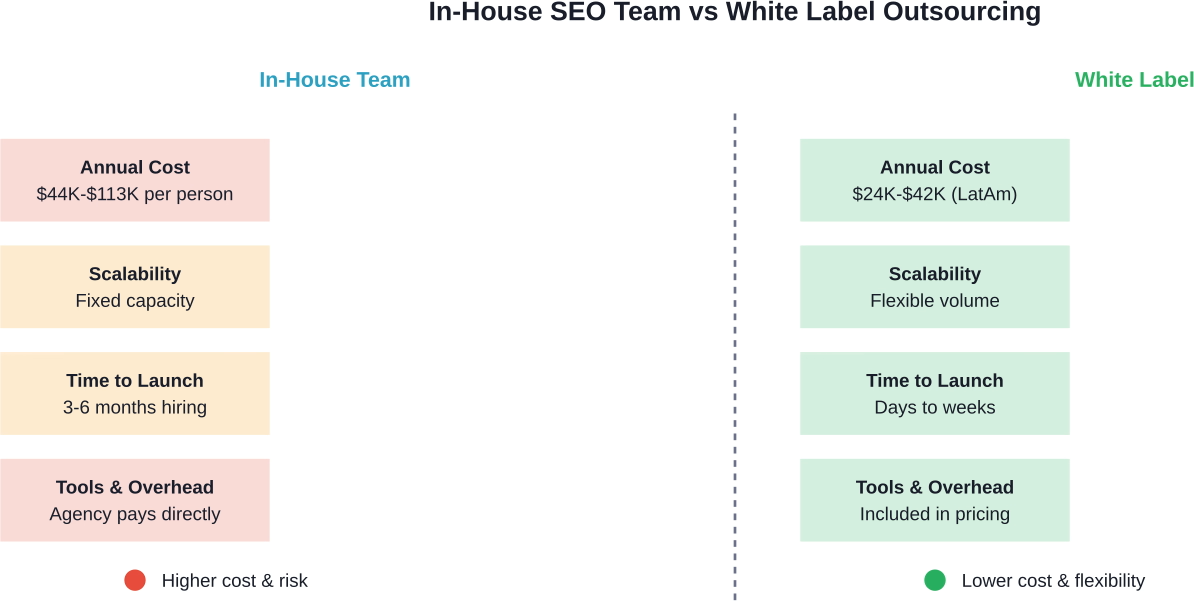
Building an internal SEO team costs significantly more than white labeling. For a small SEO team, agencies must budget for multiple full-time salaries plus the expense of tools and subscriptions.
Real talk: most US-based SEO specialists expect $45,000–$120,000 per year. But agencies can hire SEO experts in regions like Latin America for around $24,000–$42,000 annually—approximately 60% less—without sacrificing quality.
That's just the direct cost comparison. White label outsourcing offers additional strategic advantages:
Scalability Without Growing Payroll
When demand fluctuates, agencies with in-house teams face a dilemma. Hire more staff to meet peak demand? Then what happens during slower periods?
White label partnerships scale up or down based on project volume. No unused capacity. No layoffs during lean months.
Access to Specialized Expertise
SEO encompasses dozens of specialized disciplines—technical audits, link building, local optimization, content strategy, international SEO. Building expertise across all areas requires years and significant investment.
White label providers focus exclusively on SEO. They've already invested in training, tools, and process refinement. Agencies immediately access this accumulated expertise without the development timeline.
Faster Service Expansion
Clients often request services beyond an agency's core competency. Without white label partnerships, agencies must turn down revenue or risk disappointing clients with subpar work.
With reliable white label providers, agencies can confidently expand service offerings overnight. A social media agency can add SEO. A web design shop can offer ongoing optimization. Revenue opportunities that previously required months of team building now require a single partnership conversation.
Focus on Core Strengths
Many agencies excel at client relationships, strategy, and creative work but lack deep technical SEO capabilities. White label outsourcing allows agencies to stay focused on what they do best while partnering for specialized execution.
White Label SEO Services Agencies Can Outsource
Not every SEO task makes sense to outsource. Strategic planning and client relationship management should typically stay in-house. But execution-heavy tasks often deliver better ROI when handled by specialists.
Technical SEO Audits and Implementation
Technical SEO requires specialized knowledge of site architecture, crawlability, indexing, and performance optimization. White label providers conduct comprehensive audits identifying issues like:
- Crawl errors and indexation problems
- Site speed and Core Web Vitals optimization
- Mobile usability issues
- Structured data implementation
- XML sitemap and robots.txt configuration
Providers then implement fixes or provide detailed technical specifications for development teams.
Content Creation and Optimization
SEO content demands both writing skill and optimization knowledge. White label content teams produce blog posts, landing pages, product descriptions, and other assets optimized for target keywords while maintaining readability.
Quality varies significantly between providers. Some deliver generic, formulaic content. Others employ subject matter experts who create genuinely valuable resources.
Link Building and Outreach
Link building remains time-intensive and relationship-dependent. White label providers handle outreach campaigns, guest posting, digital PR, and other link acquisition strategies.
According to Search Engine Journal's link building guide, strategies have evolved significantly. Link farms and exchanges are long gone. Modern link building focuses on earning links through outreach and high-quality content rather than spammy techniques.
Local SEO Services
Local optimization involves Google Business Profile management, citation building, review generation, and local content creation. These services require consistent execution but don't necessarily need the client-facing agency's direct involvement.
White label local SEO providers manage listings across directories, monitor reviews, and optimize local search presence while the agency maintains client relationships.
SEO Reporting and Analytics
Comprehensive reporting requires data collection, analysis, and visualization. White label providers compile performance metrics, track ranking changes, analyze traffic patterns, and create branded reports the agency can deliver directly to clients.
Keyword Research and Competitive Analysis
Thorough keyword research and competitor analysis lay the foundation for effective SEO strategies. White label teams identify target keywords, analyze search intent, evaluate competition, and develop content roadmaps.
White Label SEO Pricing Models Explained
White label providers structure pricing in several ways. Understanding these models helps agencies select arrangements that align with their business model and client needs.
Hourly Rate Pricing
Popular with freelancers and consultants, less common with agencies. The average hourly rate for SEO providers sits at approximately $100-$200.
Hourly pricing offers flexibility for one-off projects or variable workloads. However, it creates uncertainty around total costs and can lead to disputes over time tracking.
Monthly Retainer Packages
Most white label agencies offer tiered monthly packages with set hours or deliverables. For example, packages might include:
- Basic: 10-15 hours of work per month
- Standard: 20-25 hours of work per month
- Premium: 30+ hours of work per month
Retainers provide predictable costs and consistent service delivery. Agencies can mark up the white label rate and build in their margin.
Project-Based Pricing
For defined scope work like technical audits, site migrations, or content batches, project pricing offers clarity. Both parties agree on deliverables and total cost upfront.
This model works well for agencies that prefer transaction-based relationships over ongoing partnerships.
Revenue Share Arrangements
Some white label partnerships split client revenue. The agency handles sales and account management, while the provider executes SEO work. Revenue splits typically range from 70/30 to 50/50 depending on each party's contribution.
Revenue sharing aligns incentives—both parties benefit from client retention and results. But it requires transparency and trust.
How to Choose a Reliable White Label SEO Provider
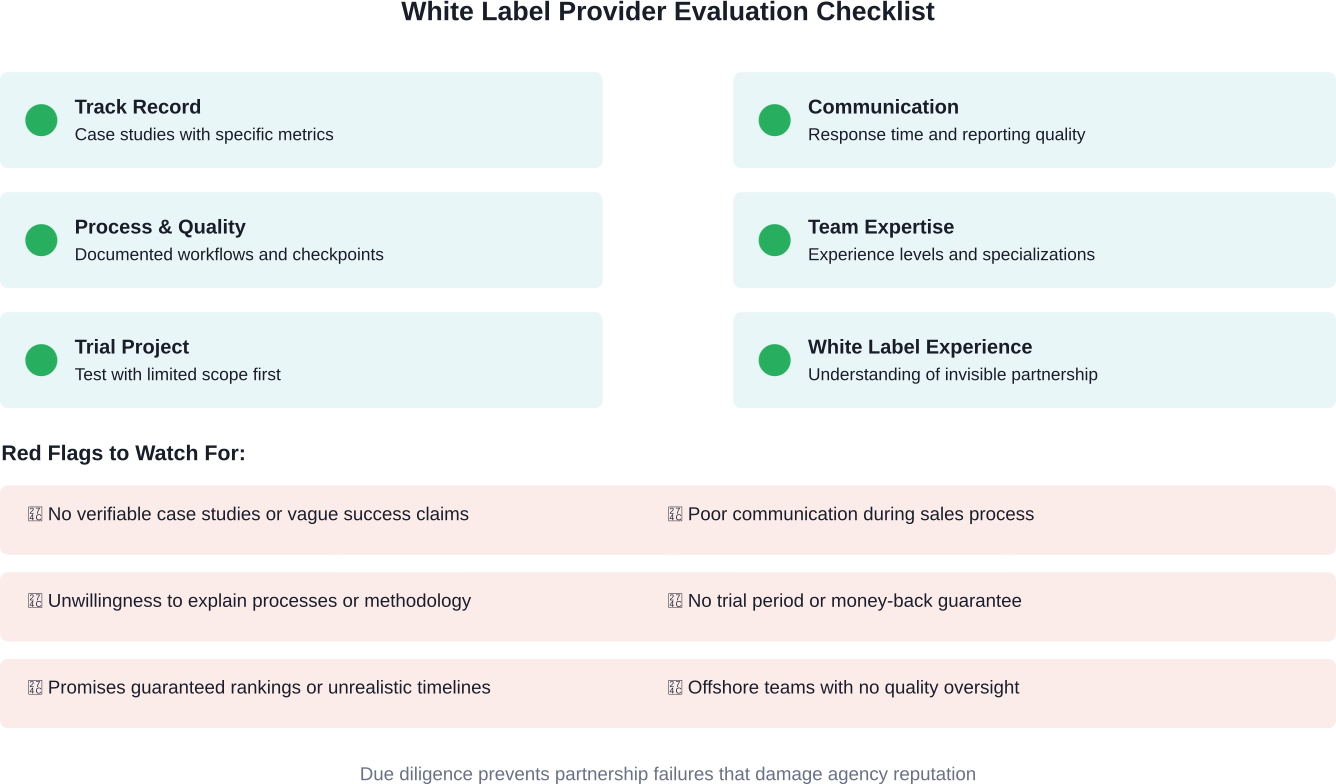
Selecting the wrong white label partner damages client relationships and agency reputation. Agencies should evaluate potential providers across multiple criteria before committing.
Evaluate Their Track Record and Case Studies
Reputable providers showcase concrete results through case studies and client testimonials. Look for specific metrics—ranking improvements, traffic increases, conversion growth.
But wait. Generic case studies with vague claims like "increased rankings" don't cut it. Detailed case studies should include starting position, strategy implemented, timeline, and measurable outcomes.
Some providers report success rates and client satisfaction metrics. For instance, proven track records might show 97% success rates and 9.1+ client satisfaction scores—specific numbers indicate systematic quality measurement.
Assess Communication and Reporting Standards
White label relationships require clear communication despite the behind-the-scenes nature. According to Search Engine Journal's analysis of client-provider relationships, communication failures rank among the top causes of partnership breakdown.
Strong providers maintain regular check-ins, provide detailed progress updates, and respond quickly to questions. They understand that the agency needs visibility to manage client expectations.
Reporting quality matters too. Can they deliver branded reports in your format? How detailed is their performance tracking? Do they explain results or just dump data?
Verify Their Process and Quality Control
Ask potential providers to walk through their process step-by-step. How do they approach keyword research? What tools do they use? How do they quality-check deliverables before submission?
Providers without documented processes often deliver inconsistent results. Look for systematic approaches with multiple quality checkpoints.
Review Their Team Structure and Expertise
Who actually does the work? Some white label providers employ experienced SEO specialists. Others offshore to low-cost contractors with minimal expertise.
The team structure impacts quality significantly. Ask about team member experience levels, specializations, and how work gets distributed.
Test With a Small Project First
Never commit to a large retainer without testing the relationship. Start with a limited scope project—maybe a technical audit or content batch.
This trial period reveals how they handle deadlines, communicate issues, and deliver quality. One small project tells more than a dozen sales conversations.
Understand Their Approach to White Label Relationships
Some providers have extensive white label experience and understand the nuances. Others primarily serve direct clients and treat white label partnerships as secondary.
Experienced white label providers know to stay invisible, deliver unbranded work, and never contact clients directly. They understand their role in the agency's ecosystem.
Managing White Label Partnerships Effectively
Selecting the right provider is half the battle. Managing the ongoing relationship determines long-term success.
Establish Clear Communication Protocols
Set expectations upfront about communication frequency, preferred channels, and response time requirements. Weekly check-ins? Email-only? Slack channel? Project management software?
Clear protocols prevent misunderstandings and ensure both parties stay aligned on project status.
Create Detailed Project Briefs
Vague instructions produce mediocre results. Comprehensive project briefs should include:
- Client background and industry context
- Specific deliverables and success criteria
- Target keywords and competitive landscape
- Brand voice and content guidelines
- Timeline and milestone dates
- Any restrictions or special requirements
Time invested in thorough briefs pays dividends through better first-draft quality and fewer revision cycles.
Implement Quality Review Processes
Never deliver white label work to clients without internal review. Even trusted providers occasionally miss details or misunderstand requirements.
Build review time into project timelines. Check deliverables against the original brief, verify quality standards, and test implementation before client presentation.
Maintain Client Relationships Directly
According to Moz's agency hiring guide, the best partnerships work when agencies maintain direct client relationships even while outsourcing execution. Agencies own strategy, communication, and results—the white label provider handles specialized tasks.
This structure protects agency positioning and ensures clients receive consistent service regardless of which team member does the work.
Build Long-Term Strategic Partnerships
Transactional vendor relationships rarely produce exceptional results. Strategic partnerships where both parties invest in mutual success deliver better outcomes.
Look for providers willing to understand the agency's business model, adapt to specific needs, and collaborate on improvement. These relationships strengthen over time as the provider learns client preferences and agency standards.

Run White Label SEO Without Losing Control of Delivery
White label SEO often breaks when too many moving parts sit outside your control. Content, links, technical work – different people, different timelines, and gaps start to show in what you deliver to clients. NeoWork approaches this by building dedicated teams that work inside your process instead of alongside it. That means the same people stay involved across deliverables, follow your workflows, and adjust as client needs shift.
With a 3.2% candidate selectivity rate, the focus stays on people who can handle ongoing execution, and a 91% retention rate keeps that setup stable over time. If you want white label SEO to feel more predictable on the delivery side, reach out to NeoWork and see how a dedicated team could support your client work.
Common White Label SEO Challenges and Solutions
Even well-managed white label partnerships face occasional challenges. Anticipating common issues helps agencies navigate them smoothly.
Quality Inconsistency
Challenge: Deliverable quality varies from project to project.
Solution: Establish detailed quality standards upfront. Create style guides, content templates, and technical checklists. Review samples before committing to large projects. Consider assigning dedicated team members to your account for consistency.
Communication Breakdowns
Challenge: Missed deadlines or misunderstood requirements damage client relationships.
Solution: Over-communicate early in the relationship. Confirm understanding after sharing briefs. Request progress updates at key milestones. Build buffer time into client deadlines to accommodate provider delays.
Confidentiality Concerns
Challenge: Clients discover the white label arrangement, creating trust issues.
Solution: Formal non-disclosure agreements should govern white label partnerships. Providers must understand the importance of remaining invisible. Some agencies conduct video calls with clients while the white label team participates silently, maintaining the illusion of internal capability.
Scope Creep and Budget Overruns
Challenge: Projects expand beyond original parameters, eroding margins.
Solution: Define scope precisely in project briefs. Implement change order processes for additional work. Review provider invoices against original agreements before paying.
Knowledge Transfer Gaps
Challenge: The provider has technical knowledge, but the agency can't speak intelligently about implementation with clients.
Solution: Request detailed documentation explaining what was done and why. Schedule knowledge transfer calls where providers walk through technical work. Over time, agencies build their own expertise through this osmosis.
The Future of White Label SEO Outsourcing in 2026
According to Forrester's 2026 predictions for marketing agencies, the traditional agency model continues evolving. Agencies are transforming from single-mode client partners into marketing purveyors operating across multiple business modes—vendors, merchants, affiliates, and partners.
According to Forrester's 2026 predictions, 85% of US B2C marketing executives plan to review their media agencies in 2026, marking a significant uptick from assignments governed by traditional three-to-five-year agreements.
What does this mean for white label SEO outsourcing?
Increased Demand for Specialized Services
As agencies adopt multi-modal operating structures, they'll need even more specialized partnerships. Generalist white label providers may struggle while specialists in areas like technical SEO, international optimization, or AI-assisted content thrive.
AI Integration in White Label Services
According to Forrester's State Of AI Survey, 2025, three-quarters of AI decision-makers say their enterprises have invested more than $300,000 in generative AI to date. White label providers increasingly incorporate AI tools for content generation, keyword research, and technical analysis.
However, the same research warns that B2B companies will lose more than $10 billion because of ungoverned use of generative AI. Quality white label providers balance AI efficiency with human expertise and oversight.
Greater Transparency Expectations
Though white label arrangements remain invisible to end clients, agencies increasingly demand transparency from their providers. Detailed reporting, process visibility, and collaborative planning replace black-box delivery models.
Performance-Based Pricing Models
Traditional hourly and retainer pricing may give way to outcome-based arrangements. Providers who tie pricing to results—ranking improvements, traffic growth, conversion increases—differentiate themselves from commodity vendors.
White Label vs Building In-House SEO Teams
Not every agency should outsource all SEO services. The decision between white label partnerships and internal teams depends on several factors.
When White Label Makes Sense
- The agency is expanding into SEO for the first time
- Client demand fluctuates significantly month-to-month
- Specialized expertise is needed for specific projects
- Capital is limited for team expansion
- The agency wants to test market demand before committing to hires
When In-House Teams Make Sense
- SEO represents core business focus, not a supplementary service
- Client volume consistently supports full-time positions
- The agency wants complete control over methodology and quality
- Proprietary processes or intellectual property need protection
- Long-term economics favor internal investment over outsourcing markups
The Hybrid Approach
Many successful agencies combine both models. Internal strategists handle client relationships, planning, and high-level consulting. White label partners execute specialized technical work, content production, and link building.
This hybrid structure provides control and expertise where it matters most while maintaining scalability and cost efficiency.
Key Metrics to Track in White Label Partnerships
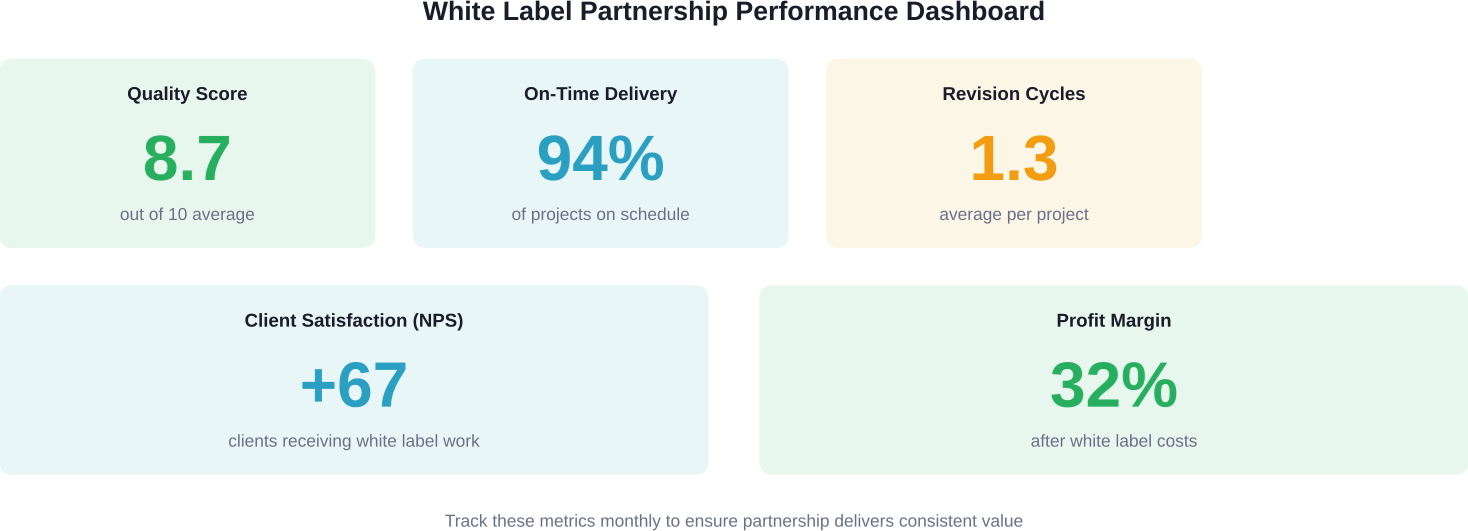
Measuring white label partnership performance ensures the relationship delivers value. Track these metrics consistently:
Deliverable Quality Scores
Rate completed work on a consistent scale. Track quality trends over time. Are scores improving as the provider learns preferences? Or declining as they get complacent?
On-Time Delivery Rate
What percentage of projects meet agreed deadlines? Chronic lateness indicates capacity problems or poor project management.
Revision Cycles Required
How many rounds of revisions does typical work require? High revision counts signal communication gaps or quality issues.
Client Satisfaction Impact
Do clients receiving white label work show higher or lower satisfaction than those served by internal teams? Net Promoter Scores and retention rates tell the story.
Profitability Per Client
Calculate true profitability after white label costs. Some high-volume arrangements may generate revenue without meaningful profit.
Opportunity Cost Analysis
Compare what the agency pays for white label services against what building internal capability would cost. Periodically reassess whether outsourcing still makes economic sense.
Moving Forward With White Label SEO Outsourcing
White label SEO outsourcing offers agencies a practical path to expand service offerings, scale operations, and serve clients more comprehensively without the overhead of building large internal teams.
But success requires more than simply finding the cheapest provider. Strategic partnerships built on clear communication, aligned incentives, and mutual commitment to quality deliver sustainable value.
The agencies that thrive with white label outsourcing approach it systematically. They thoroughly vet providers, establish clear processes, maintain direct client relationships, and continuously measure partnership performance.
According to Forrester's research, agency business models continue evolving rapidly in 2026. Traditional structures give way to more flexible, multi-modal approaches. White label partnerships fit naturally into this evolution—allowing agencies to assemble best-in-class capabilities across specializations.
For agencies considering white label SEO outsourcing, the question isn't whether the model works. Community discussions and industry data confirm it does. The question is how to implement it effectively—selecting the right partners, structuring relationships properly, and managing quality consistently.
The agencies that master this balance gain significant competitive advantages. They can say yes to more opportunities, deliver broader expertise, and scale faster than competitors limited by internal capacity.
Start small. Test one provider with a limited project. Build confidence in the relationship before expanding scope. Over time, strategic white label partnerships become force multipliers—extending agency capabilities far beyond what any single team could accomplish alone.
The SEO landscape grows more complex each year. Staying current across all specializations requires constant investment in learning, tools, and expertise. White label outsourcing provides a shortcut—immediate access to specialists who've already made those investments.
For agencies ready to scale, diversify service offerings, or simply operate more efficiently, white label SEO outsourcing deserves serious consideration. The right partnerships at the right time can transform agency trajectories.
Frequently Asked Questions About White Label SEO Outsourcing
Topics
White Label SEO Outsourcing Guide: 2026 Complete Breakdown

White label SEO outsourcing allows agencies to deliver professional SEO services under their own brand by partnering with specialized third-party providers. This guide covers how white label partnerships work, pricing models ranging from hourly rates ($100-$200/hour average) to monthly retainers, key services you can outsource, and criteria for selecting reliable providers that maintain quality while helping agencies scale profitably.
Digital marketing agencies face a recurring challenge: clients demand comprehensive SEO services, but building an in-house team capable of delivering everything costs a fortune. Salaries, tools, training, overhead—it adds up fast.
White label SEO outsourcing solves this problem. According to Search Engine Journal, agencies use white label partnerships to complete work they sell under their own name with no mention of the partner agency. But here's the thing—not all white label arrangements deliver equal value.
Some partnerships strengthen client loyalty and create additional revenue streams. Others damage reputations through poor deliverables and missed deadlines.
So how do agencies separate reliable white label providers from risky ones? And which services make sense to outsource versus keep in-house? This guide breaks down everything agencies need to know about white label SEO outsourcing in 2026.
What Is White Label SEO Outsourcing?
White label SEO is when an agency provides SEO services to clients under its own brand but has a third-party agency, consultant, or team fulfill the actual work. The client sees only the agency's branding throughout the entire process.
Think of it like store-brand products. A grocery chain doesn't manufacture its own cereal—a specialized producer makes it, then the store slaps its label on the box. According to Forrester research, private-label products are increasingly competitive with branded products as price pressures force consumer choice.
In SEO terms, the partnership typically works like this:
- The client-facing agency signs the contract and manages communication
- The white label provider handles technical execution behind the scenes
- Deliverables get branded with the client-facing agency's logo and identity
- The client never knows a third party was involved
This arrangement differs from traditional subcontracting where multiple parties might interact directly with the client. White label relationships maintain complete separation.
How White Label SEO Partnerships Actually Function
Most white label arrangements follow a standardized workflow. The client-facing agency receives requirements from their client, then submits a project brief to the white label provider. The provider completes the work according to specifications and returns unbranded deliverables.
The agency then applies its own branding, reviews quality, and delivers to the end client. Communication flows through the agency—the white label provider remains invisible to the client.
According to Search Engine Journal's white label partnerships article, agencies sometimes make as little as 15 percent margin on other services while still strengthening client loyalty, the white label solution helps strengthen client loyalty while providing an additional revenue stream to trusted partners.
Why Agencies Choose to Outsource SEO Services
Building an internal SEO team costs significantly more than white labeling. For a small SEO team, agencies must budget for multiple full-time salaries plus the expense of tools and subscriptions.
Real talk: most US-based SEO specialists expect $45,000–$120,000 per year. But agencies can hire SEO experts in regions like Latin America for around $24,000–$42,000 annually—approximately 60% less—without sacrificing quality.
That's just the direct cost comparison. White label outsourcing offers additional strategic advantages:
Scalability Without Growing Payroll
When demand fluctuates, agencies with in-house teams face a dilemma. Hire more staff to meet peak demand? Then what happens during slower periods?
White label partnerships scale up or down based on project volume. No unused capacity. No layoffs during lean months.
Access to Specialized Expertise
SEO encompasses dozens of specialized disciplines—technical audits, link building, local optimization, content strategy, international SEO. Building expertise across all areas requires years and significant investment.
White label providers focus exclusively on SEO. They've already invested in training, tools, and process refinement. Agencies immediately access this accumulated expertise without the development timeline.
Faster Service Expansion
Clients often request services beyond an agency's core competency. Without white label partnerships, agencies must turn down revenue or risk disappointing clients with subpar work.
With reliable white label providers, agencies can confidently expand service offerings overnight. A social media agency can add SEO. A web design shop can offer ongoing optimization. Revenue opportunities that previously required months of team building now require a single partnership conversation.
Focus on Core Strengths
Many agencies excel at client relationships, strategy, and creative work but lack deep technical SEO capabilities. White label outsourcing allows agencies to stay focused on what they do best while partnering for specialized execution.
White Label SEO Services Agencies Can Outsource
Not every SEO task makes sense to outsource. Strategic planning and client relationship management should typically stay in-house. But execution-heavy tasks often deliver better ROI when handled by specialists.
Technical SEO Audits and Implementation
Technical SEO requires specialized knowledge of site architecture, crawlability, indexing, and performance optimization. White label providers conduct comprehensive audits identifying issues like:
- Crawl errors and indexation problems
- Site speed and Core Web Vitals optimization
- Mobile usability issues
- Structured data implementation
- XML sitemap and robots.txt configuration
Providers then implement fixes or provide detailed technical specifications for development teams.
Content Creation and Optimization
SEO content demands both writing skill and optimization knowledge. White label content teams produce blog posts, landing pages, product descriptions, and other assets optimized for target keywords while maintaining readability.
Quality varies significantly between providers. Some deliver generic, formulaic content. Others employ subject matter experts who create genuinely valuable resources.
Link Building and Outreach
Link building remains time-intensive and relationship-dependent. White label providers handle outreach campaigns, guest posting, digital PR, and other link acquisition strategies.
According to Search Engine Journal's link building guide, strategies have evolved significantly. Link farms and exchanges are long gone. Modern link building focuses on earning links through outreach and high-quality content rather than spammy techniques.
Local SEO Services
Local optimization involves Google Business Profile management, citation building, review generation, and local content creation. These services require consistent execution but don't necessarily need the client-facing agency's direct involvement.
White label local SEO providers manage listings across directories, monitor reviews, and optimize local search presence while the agency maintains client relationships.
SEO Reporting and Analytics
Comprehensive reporting requires data collection, analysis, and visualization. White label providers compile performance metrics, track ranking changes, analyze traffic patterns, and create branded reports the agency can deliver directly to clients.
Keyword Research and Competitive Analysis
Thorough keyword research and competitor analysis lay the foundation for effective SEO strategies. White label teams identify target keywords, analyze search intent, evaluate competition, and develop content roadmaps.
White Label SEO Pricing Models Explained
White label providers structure pricing in several ways. Understanding these models helps agencies select arrangements that align with their business model and client needs.
Hourly Rate Pricing
Popular with freelancers and consultants, less common with agencies. The average hourly rate for SEO providers sits at approximately $100-$200.
Hourly pricing offers flexibility for one-off projects or variable workloads. However, it creates uncertainty around total costs and can lead to disputes over time tracking.
Monthly Retainer Packages
Most white label agencies offer tiered monthly packages with set hours or deliverables. For example, packages might include:
- Basic: 10-15 hours of work per month
- Standard: 20-25 hours of work per month
- Premium: 30+ hours of work per month
Retainers provide predictable costs and consistent service delivery. Agencies can mark up the white label rate and build in their margin.
Project-Based Pricing
For defined scope work like technical audits, site migrations, or content batches, project pricing offers clarity. Both parties agree on deliverables and total cost upfront.
This model works well for agencies that prefer transaction-based relationships over ongoing partnerships.
Revenue Share Arrangements
Some white label partnerships split client revenue. The agency handles sales and account management, while the provider executes SEO work. Revenue splits typically range from 70/30 to 50/50 depending on each party's contribution.
Revenue sharing aligns incentives—both parties benefit from client retention and results. But it requires transparency and trust.
How to Choose a Reliable White Label SEO Provider
Selecting the wrong white label partner damages client relationships and agency reputation. Agencies should evaluate potential providers across multiple criteria before committing.
Evaluate Their Track Record and Case Studies
Reputable providers showcase concrete results through case studies and client testimonials. Look for specific metrics—ranking improvements, traffic increases, conversion growth.
But wait. Generic case studies with vague claims like "increased rankings" don't cut it. Detailed case studies should include starting position, strategy implemented, timeline, and measurable outcomes.
Some providers report success rates and client satisfaction metrics. For instance, proven track records might show 97% success rates and 9.1+ client satisfaction scores—specific numbers indicate systematic quality measurement.
Assess Communication and Reporting Standards
White label relationships require clear communication despite the behind-the-scenes nature. According to Search Engine Journal's analysis of client-provider relationships, communication failures rank among the top causes of partnership breakdown.
Strong providers maintain regular check-ins, provide detailed progress updates, and respond quickly to questions. They understand that the agency needs visibility to manage client expectations.
Reporting quality matters too. Can they deliver branded reports in your format? How detailed is their performance tracking? Do they explain results or just dump data?
Verify Their Process and Quality Control
Ask potential providers to walk through their process step-by-step. How do they approach keyword research? What tools do they use? How do they quality-check deliverables before submission?
Providers without documented processes often deliver inconsistent results. Look for systematic approaches with multiple quality checkpoints.
Review Their Team Structure and Expertise
Who actually does the work? Some white label providers employ experienced SEO specialists. Others offshore to low-cost contractors with minimal expertise.
The team structure impacts quality significantly. Ask about team member experience levels, specializations, and how work gets distributed.
Test With a Small Project First
Never commit to a large retainer without testing the relationship. Start with a limited scope project—maybe a technical audit or content batch.
This trial period reveals how they handle deadlines, communicate issues, and deliver quality. One small project tells more than a dozen sales conversations.
Understand Their Approach to White Label Relationships
Some providers have extensive white label experience and understand the nuances. Others primarily serve direct clients and treat white label partnerships as secondary.
Experienced white label providers know to stay invisible, deliver unbranded work, and never contact clients directly. They understand their role in the agency's ecosystem.
Managing White Label Partnerships Effectively
Selecting the right provider is half the battle. Managing the ongoing relationship determines long-term success.
Establish Clear Communication Protocols
Set expectations upfront about communication frequency, preferred channels, and response time requirements. Weekly check-ins? Email-only? Slack channel? Project management software?
Clear protocols prevent misunderstandings and ensure both parties stay aligned on project status.
Create Detailed Project Briefs
Vague instructions produce mediocre results. Comprehensive project briefs should include:
- Client background and industry context
- Specific deliverables and success criteria
- Target keywords and competitive landscape
- Brand voice and content guidelines
- Timeline and milestone dates
- Any restrictions or special requirements
Time invested in thorough briefs pays dividends through better first-draft quality and fewer revision cycles.
Implement Quality Review Processes
Never deliver white label work to clients without internal review. Even trusted providers occasionally miss details or misunderstand requirements.
Build review time into project timelines. Check deliverables against the original brief, verify quality standards, and test implementation before client presentation.
Maintain Client Relationships Directly
According to Moz's agency hiring guide, the best partnerships work when agencies maintain direct client relationships even while outsourcing execution. Agencies own strategy, communication, and results—the white label provider handles specialized tasks.
This structure protects agency positioning and ensures clients receive consistent service regardless of which team member does the work.
Build Long-Term Strategic Partnerships
Transactional vendor relationships rarely produce exceptional results. Strategic partnerships where both parties invest in mutual success deliver better outcomes.
Look for providers willing to understand the agency's business model, adapt to specific needs, and collaborate on improvement. These relationships strengthen over time as the provider learns client preferences and agency standards.
Run White Label SEO Without Losing Control of Delivery
White label SEO often breaks when too many moving parts sit outside your control. Content, links, technical work – different people, different timelines, and gaps start to show in what you deliver to clients. NeoWork approaches this by building dedicated teams that work inside your process instead of alongside it. That means the same people stay involved across deliverables, follow your workflows, and adjust as client needs shift.
With a 3.2% candidate selectivity rate, the focus stays on people who can handle ongoing execution, and a 91% retention rate keeps that setup stable over time. If you want white label SEO to feel more predictable on the delivery side, reach out to NeoWork and see how a dedicated team could support your client work.
Common White Label SEO Challenges and Solutions
Even well-managed white label partnerships face occasional challenges. Anticipating common issues helps agencies navigate them smoothly.
Quality Inconsistency
Challenge: Deliverable quality varies from project to project.
Solution: Establish detailed quality standards upfront. Create style guides, content templates, and technical checklists. Review samples before committing to large projects. Consider assigning dedicated team members to your account for consistency.
Communication Breakdowns
Challenge: Missed deadlines or misunderstood requirements damage client relationships.
Solution: Over-communicate early in the relationship. Confirm understanding after sharing briefs. Request progress updates at key milestones. Build buffer time into client deadlines to accommodate provider delays.
Confidentiality Concerns
Challenge: Clients discover the white label arrangement, creating trust issues.
Solution: Formal non-disclosure agreements should govern white label partnerships. Providers must understand the importance of remaining invisible. Some agencies conduct video calls with clients while the white label team participates silently, maintaining the illusion of internal capability.
Scope Creep and Budget Overruns
Challenge: Projects expand beyond original parameters, eroding margins.
Solution: Define scope precisely in project briefs. Implement change order processes for additional work. Review provider invoices against original agreements before paying.
Knowledge Transfer Gaps
Challenge: The provider has technical knowledge, but the agency can't speak intelligently about implementation with clients.
Solution: Request detailed documentation explaining what was done and why. Schedule knowledge transfer calls where providers walk through technical work. Over time, agencies build their own expertise through this osmosis.
The Future of White Label SEO Outsourcing in 2026
According to Forrester's 2026 predictions for marketing agencies, the traditional agency model continues evolving. Agencies are transforming from single-mode client partners into marketing purveyors operating across multiple business modes—vendors, merchants, affiliates, and partners.
According to Forrester's 2026 predictions, 85% of US B2C marketing executives plan to review their media agencies in 2026, marking a significant uptick from assignments governed by traditional three-to-five-year agreements.
What does this mean for white label SEO outsourcing?
Increased Demand for Specialized Services
As agencies adopt multi-modal operating structures, they'll need even more specialized partnerships. Generalist white label providers may struggle while specialists in areas like technical SEO, international optimization, or AI-assisted content thrive.
AI Integration in White Label Services
According to Forrester's State Of AI Survey, 2025, three-quarters of AI decision-makers say their enterprises have invested more than $300,000 in generative AI to date. White label providers increasingly incorporate AI tools for content generation, keyword research, and technical analysis.
However, the same research warns that B2B companies will lose more than $10 billion because of ungoverned use of generative AI. Quality white label providers balance AI efficiency with human expertise and oversight.
Greater Transparency Expectations
Though white label arrangements remain invisible to end clients, agencies increasingly demand transparency from their providers. Detailed reporting, process visibility, and collaborative planning replace black-box delivery models.
Performance-Based Pricing Models
Traditional hourly and retainer pricing may give way to outcome-based arrangements. Providers who tie pricing to results—ranking improvements, traffic growth, conversion increases—differentiate themselves from commodity vendors.
White Label vs Building In-House SEO Teams
Not every agency should outsource all SEO services. The decision between white label partnerships and internal teams depends on several factors.
When White Label Makes Sense
- The agency is expanding into SEO for the first time
- Client demand fluctuates significantly month-to-month
- Specialized expertise is needed for specific projects
- Capital is limited for team expansion
- The agency wants to test market demand before committing to hires
When In-House Teams Make Sense
- SEO represents core business focus, not a supplementary service
- Client volume consistently supports full-time positions
- The agency wants complete control over methodology and quality
- Proprietary processes or intellectual property need protection
- Long-term economics favor internal investment over outsourcing markups
The Hybrid Approach
Many successful agencies combine both models. Internal strategists handle client relationships, planning, and high-level consulting. White label partners execute specialized technical work, content production, and link building.
This hybrid structure provides control and expertise where it matters most while maintaining scalability and cost efficiency.
Key Metrics to Track in White Label Partnerships
Measuring white label partnership performance ensures the relationship delivers value. Track these metrics consistently:
Deliverable Quality Scores
Rate completed work on a consistent scale. Track quality trends over time. Are scores improving as the provider learns preferences? Or declining as they get complacent?
On-Time Delivery Rate
What percentage of projects meet agreed deadlines? Chronic lateness indicates capacity problems or poor project management.
Revision Cycles Required
How many rounds of revisions does typical work require? High revision counts signal communication gaps or quality issues.
Client Satisfaction Impact
Do clients receiving white label work show higher or lower satisfaction than those served by internal teams? Net Promoter Scores and retention rates tell the story.
Profitability Per Client
Calculate true profitability after white label costs. Some high-volume arrangements may generate revenue without meaningful profit.
Opportunity Cost Analysis
Compare what the agency pays for white label services against what building internal capability would cost. Periodically reassess whether outsourcing still makes economic sense.
Moving Forward With White Label SEO Outsourcing
White label SEO outsourcing offers agencies a practical path to expand service offerings, scale operations, and serve clients more comprehensively without the overhead of building large internal teams.
But success requires more than simply finding the cheapest provider. Strategic partnerships built on clear communication, aligned incentives, and mutual commitment to quality deliver sustainable value.
The agencies that thrive with white label outsourcing approach it systematically. They thoroughly vet providers, establish clear processes, maintain direct client relationships, and continuously measure partnership performance.
According to Forrester's research, agency business models continue evolving rapidly in 2026. Traditional structures give way to more flexible, multi-modal approaches. White label partnerships fit naturally into this evolution—allowing agencies to assemble best-in-class capabilities across specializations.
For agencies considering white label SEO outsourcing, the question isn't whether the model works. Community discussions and industry data confirm it does. The question is how to implement it effectively—selecting the right partners, structuring relationships properly, and managing quality consistently.
The agencies that master this balance gain significant competitive advantages. They can say yes to more opportunities, deliver broader expertise, and scale faster than competitors limited by internal capacity.
Start small. Test one provider with a limited project. Build confidence in the relationship before expanding scope. Over time, strategic white label partnerships become force multipliers—extending agency capabilities far beyond what any single team could accomplish alone.
The SEO landscape grows more complex each year. Staying current across all specializations requires constant investment in learning, tools, and expertise. White label outsourcing provides a shortcut—immediate access to specialists who've already made those investments.
For agencies ready to scale, diversify service offerings, or simply operate more efficiently, white label SEO outsourcing deserves serious consideration. The right partnerships at the right time can transform agency trajectories.
Frequently Asked Questions About White Label SEO Outsourcing
Topics
Related Blogs
Related Podcasts


.webp)

.webp)
.webp)



